When engineering meets architectural design
Cittadella Bridge, Alessandria
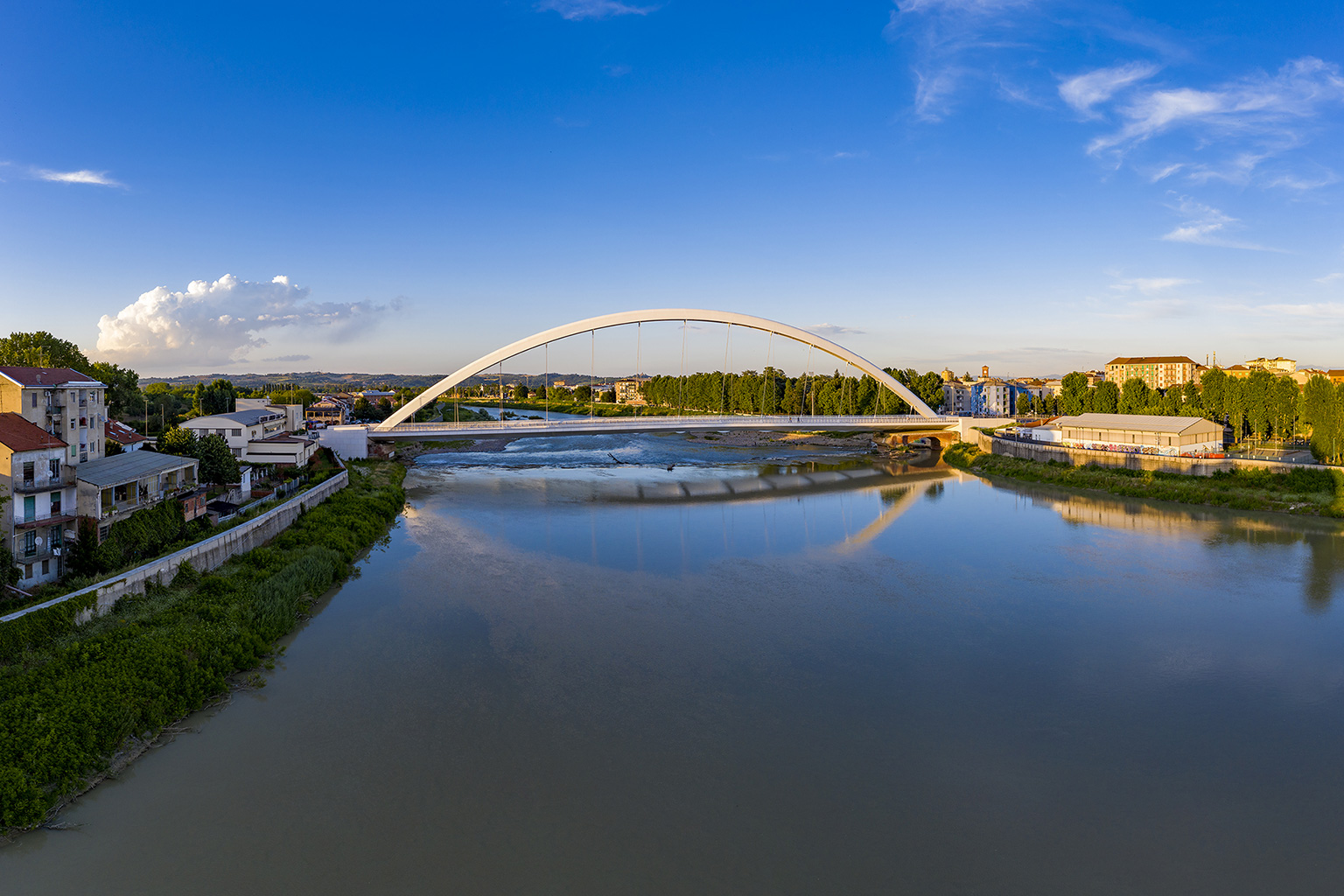
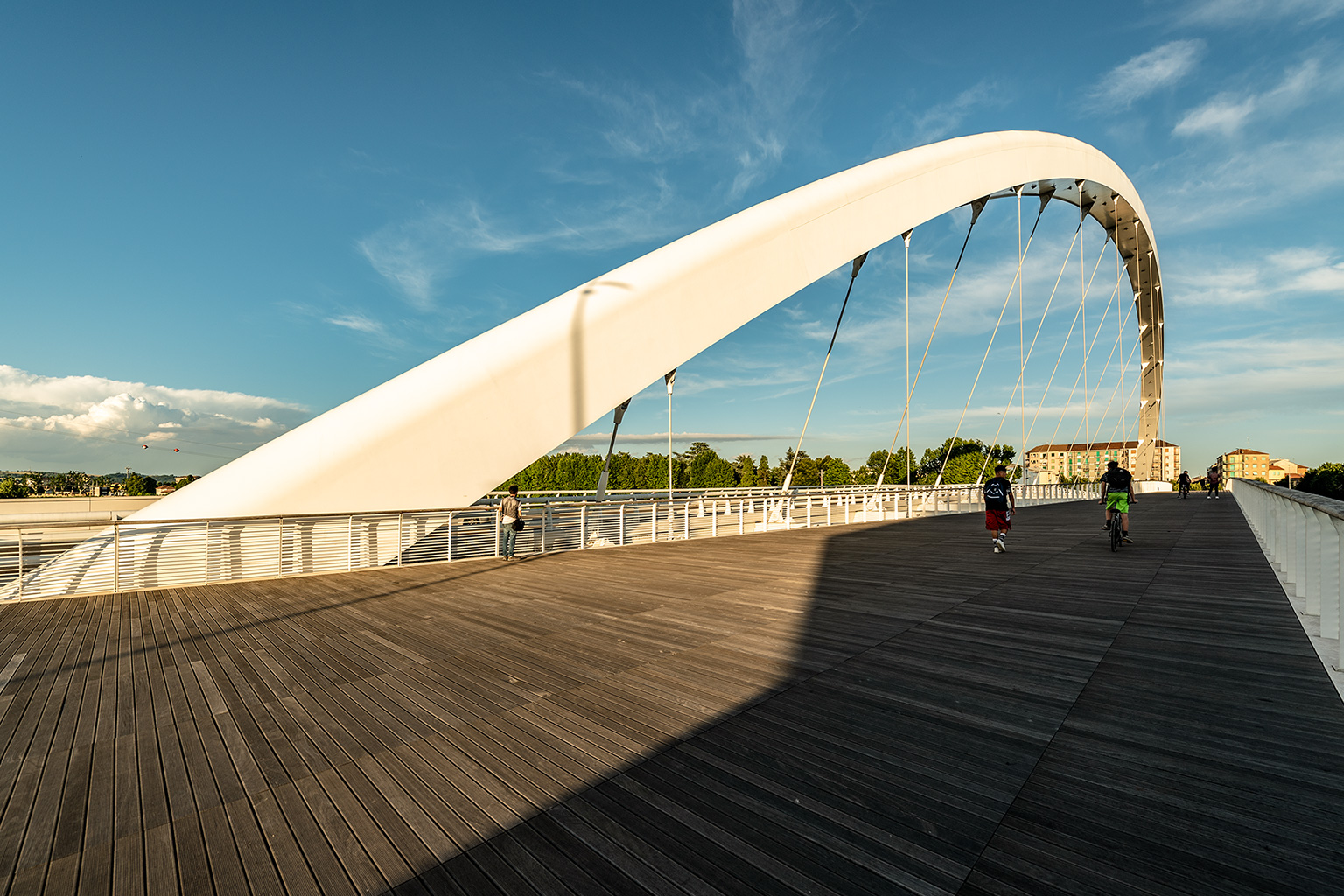
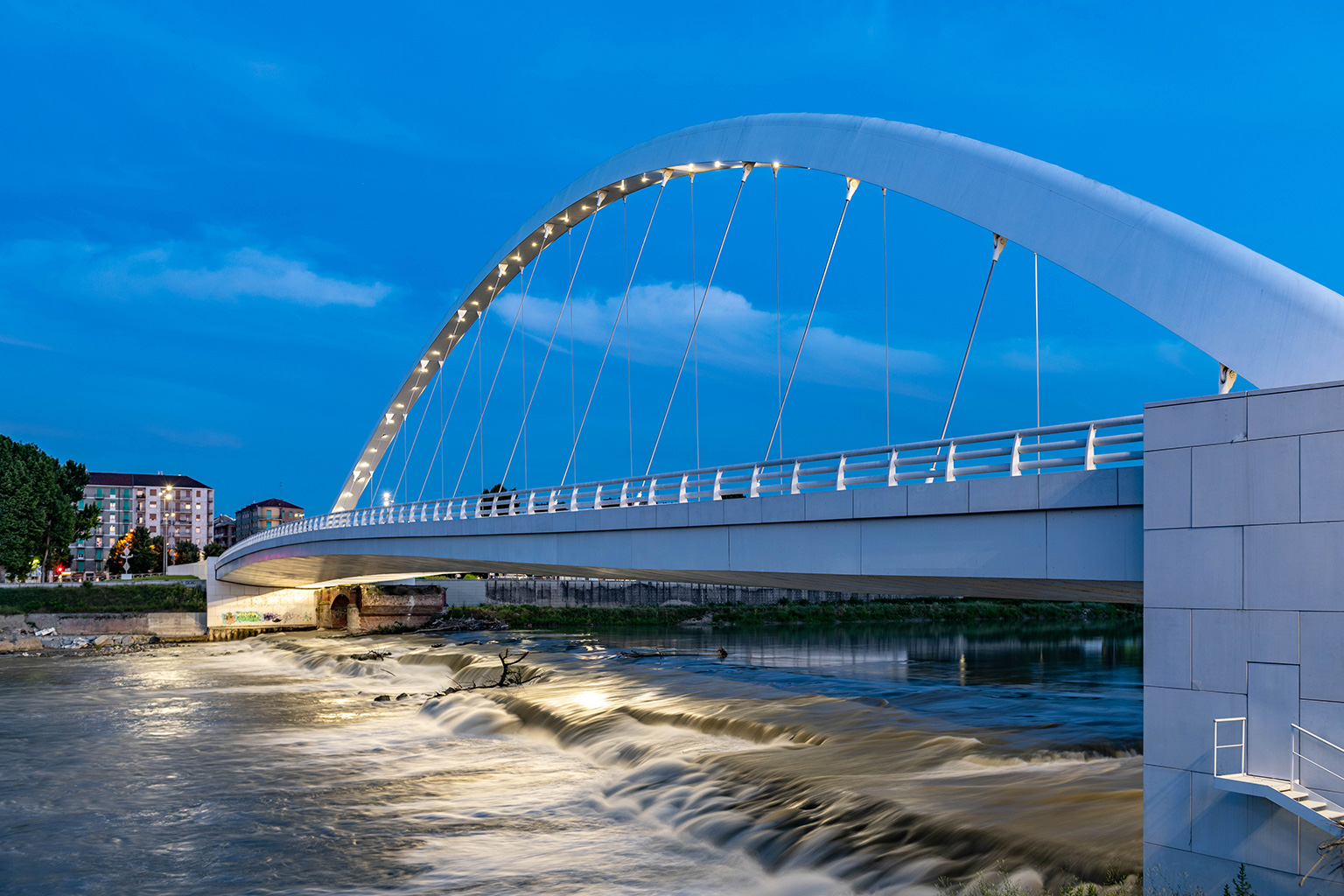
A futuristic and conceptual bridge spanning across the River Tanaro, recalling the glories of the past. The infrastructure, designed by Richard Meier & Partners, reconnects Alessandria with the 17th-century Citadel, one of the most important and best-preserved fortifications of its kind in Europe. The old Napoleonic bridge, which collapsed following the 1994 flood, was definitively demolished in 2009 and then replaced by the structure designed by Richard Meier. The bridge in Alessandria was one of the very first engineering projects tackled by DVA and, as such, it represents the starting point of a journey that has evolved over the past ten years. More than just designing form, our strength lies in making form possible by establishing a relationship with the client, understanding their needs, and building a unified and shared vision.
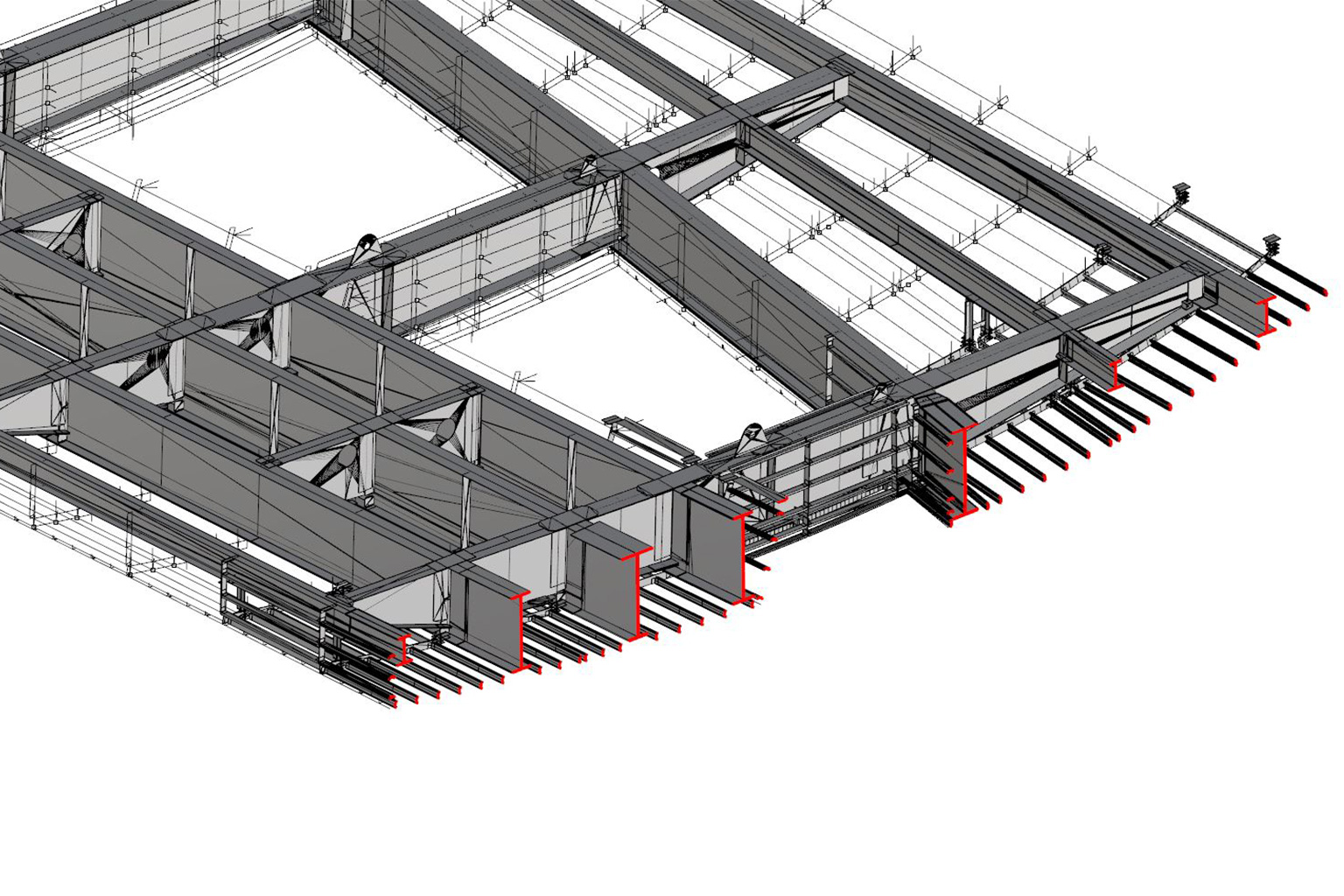
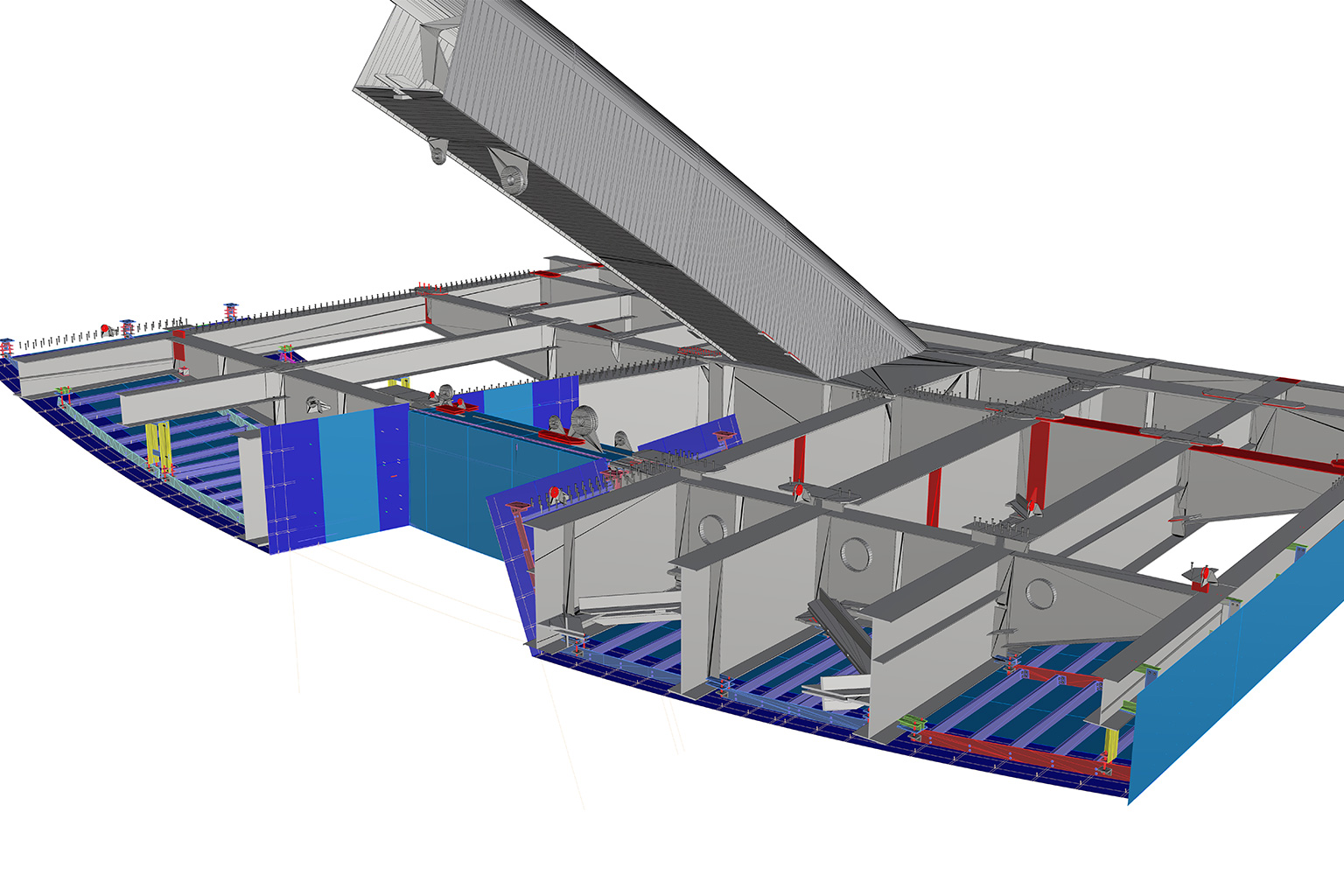
The steel cladding envisaged in the project was not available as a standardised product. The goal, therefore, was to combine a focus on design and the geometry of the cladding with the engineering of the substructure (weighing 200 tonnes), the fabrication of the workshop components, and load control. All this was made possible through the constant use of digital modelling tools and the verification of potential interferences (BIM). Decisive was our ability to interconnect a wide range of tools—from freeform modelling software, used to manage the geometric complexity of elements such as double curvature, to parametric design software aimed at optimising the production process, as well as coordination tools for detecting physical clashes between elements before the assembly phase on site. A mock-up approximately 6 metres long—compared to the bridge’s 180 metres—was produced to assess critical aspects and strengths of the design in advance. The client asked us to conduct an optimisation process that led to the complete redesign of the bridge using a greatly reduced number of components compared to what had been initially assumed. This was followed by the delivery of a coordinated model free from overlaps with elements already present on site, such as heavy steelwork and the road deck. The project also required intensive dialogue with the Historic Heritage Superintendency, due to the integration of the vestiges of the Napoleonic bridge into the new structure.
180
SPAN LENGTH
[lm]
5.500
STEEL CLADDING
[m²]
35.000
INSTALLED COMPONENTS
60.000
FIXING HOLES
“The ability to use and manage tools is the most innovative and dynamic aspect of our professional approach. Combined with the experience gained alongside those with deep technical expertise in the field, it enables us to tackle each project in the most effective and productive way.”
Other projects

A regeneration project in the heart of Milan’s Isola district
Hotel Lario Stelvio, Milan


More space for sport at Tartaglia-Olivieri
New Gymnasium at the “Tartaglia Olivieri” Upper Secondary School, Brescia