Everything you need to know about climate shelters
DVArea · 7 September 2026
Heatwaves are becoming increasingly frequent and intense, placing growing pressure on public health. In recent years, we have recorded higher temperatures, with many cities reaching risk levels affecting the entire population. This confirms that extreme heat is no longer an exceptional event, but a new challenge we must learn to live with. This is a consequence of climate change, particularly the increasing tropicalisation of the Po Valley climate, characterised by longer heatwaves, persistent tropical nights and the northward shift of the subtropical high-pressure system over northern regions.
Climate change can no longer be denied, and it is clear that heatwaves, which until only a few years ago were perceived as exceptional events, have now become a dramatic climatic norm. Their consequences extend far beyond environmental discomfort, affecting public health, social equity and the resilience of cities.
With its “Che Caldo Che Fa” campaign on the impact of heat in urban areas, Legambiente mapped surface temperatures through 171 thermal images taken across 10 neighbourhoods in Rome, Naples, Bologna, Milan and Palermo. The survey recorded an average surface temperature of 35.4°C, with peaks reaching 75.5°C. Among the most critical sun-exposed surfaces, asphalt reached an average of 52°C, with peaks of 62.7°C, while rubber flooring averaged 66°C, with peaks of 75.6°C.
Asphalt, concrete, roofs and façades absorb solar energy during the day and release it slowly during the night. Poor ventilation, traffic, air-conditioning systems and a lack of vegetation generate additional heat. As a result, urban areas can be on average 4–6°C warmer than surrounding suburban and rural areas, with temperature differences reaching as much as 10°C in some situations. This gap is particularly evident at night, when concrete continues to release the heat accumulated during the day, preventing temperatures from falling.
The data confirm a clear fact: the materials commonly found in cities overheat excessively and must either be replaced or shaded in order to avoid an unsustainable urban heat island effect.
The long-term solution is urban greenery. According to SNPA and ISPRA, neighbourhoods where tree canopy cover exceeds 50% can record temperatures up to 2.2°C lower. However, developing green infrastructure requires significant time and resources.
In the meantime, immediate responses are needed. It is within this context that climate shelters play a key role: an urgent protection measure for those who are most exposed.
What is the urban heat island effect?
The urban heat island effect is the local increase in air and surface temperatures in cities compared with surrounding rural areas. It is caused by:
- Surface energy balance. Urban surfaces increase the amount of heat stored, while reducing the latent heat flux associated with evapotranspiration. This leads to heat accumulation, which is then released during the night, keeping temperatures high.
- Artificial materials with high thermal capacity. Asphalt, concrete and brick absorb large amounts of solar radiation and release it slowly, preventing night-time cooling.
- Reduced vegetation and permeability. A lack of greenery reduces evapotranspiration, a natural process that removes heat from the environment.
- Urban morphology (urban canyon effect). Tall buildings and narrow streets trap heat and limit natural ventilation.
- Anthropogenic heat. Traffic, air conditioning, industrial activities and heating systems further contribute to rising temperatures.
With climate change driving increasingly high summer air temperatures, the urban heat island effect already present in cities, and socioeconomic dynamics preventing a growing proportion of the population from leaving urban areas during periods of extreme heat, it is essential to develop urban climate adaptation solutions.
Since 2016, in Medellín, Colombia’s second-largest city, the “Corredores Verdes” programme has been introduced as a response to the urban heat island effect. The programme created a network of thirty green corridors made up of trees, shrubs, vertical gardens and renaturalised areas. In the areas affected by these interventions, temperatures have been reduced by at least 2°C.
What are climate shelters?
Climate shelters are an urban climate adaptation solution designed to protect people from summer heatwaves. They are existing public spaces, either indoors or outdoors, that are freely accessible to everyone.
Although the concept of a climate shelter can include protection from extreme temperatures in both directions — heat and cold — in the Italian context its main function is the mitigation of extreme heat. Heatwaves are in fact the primary driver of urban climate risk in Italy. As a result, the design of climate shelters focuses primarily on summer thermal comfort and on reducing exposure to heat.
A climate shelter is an existing public place — such as a library, park, museum or civic centre — that is identified, mapped and made recognisable as a place where people can find relief from the heat without losing its original function. It often combines shade, free drinking water and ventilation and, ideally, should be located within a few minutes’ walking distance from residential areas.
The main objective is to maximise thermal comfort during heatwaves, while preserving the social and community function that public spaces should continue to provide.
When did people start talking about climate shelters?
The term “climate shelters”, referring to urban places of protection from heat, first appeared in Italy in 2021, in an article published by Corriere della Sera about Turin.
The term is therefore very recent in Italy, but it is important to remember that, since the birth of cities, public spaces have been designed to encourage social interaction and provide comfortable conditions, offering protection from rain, wind and other weather events.
Climate shelters give some public spaces a new function: protection from heatwaves. These spaces must preserve their identity and their social, cultural and recreational value, while integrating design solutions capable of providing thermal comfort during extreme heat events.
From this perspective, they can be considered resilient public spaces that provide climate adaptation solutions and are becoming increasingly important for cities exposed to the growing tropicalisation of the climate.
The first major European city to develop a structured network of climate shelters was Barcelona, which since 2019 has identified and made available more than 400 locations, including libraries, civic centres, schools and green areas, particularly for the most vulnerable members of the population.
In the following years, the model was also adopted by other European cities, including Paris, which expanded its network ahead of the 2024 Olympic Games.
In Italy, Bologna and Florence launched programmes in 2025 to map and identify climate relief points, an approach that was later followed by many other Italian municipalities.
It is important to remember that, although the term climate shelters is relatively recent, debate around climate change has been ongoing for many years, together with projects designed to counteract the urban heat island effect:
- in 2001, the scientific paper “Cool Surfaces and Shade Trees to Reduce Energy Use and Improve Air Quality in Urban Areas” explained how trees reduce the intensity of the urban heat island effect, lowering energy demand and improving air quality;
- since 2010, the GAIA Project, a European initiative funded by the LIFE+ programme and coordinated by the City of Bologna, has developed public-private partnerships for the creation of urban green areas;
- since 2017, the application of the Minimum Environmental Criteria (CAM) has made it mandatory in Italian public procurement to design public buildings with measures aimed at counteracting the urban heat island effect.
What are the characteristics of a climate shelter?
The design of an outdoor climate shelter is based on reducing perceived temperature through a combination of Nature-Based Solutions (NBS).
1. Vegetation and Botanical Selection
- Trees: plant broad-leaved trees with dense canopies capable of intercepting up to 90% of direct solar radiation.
- Low-water-demand species: select plants that are resistant to drought and heat in order to reduce the need for artificial irrigation.
- Evapotranspiration: integrate shrubs and grassed areas that release moisture and can reduce the surrounding temperature by as much as 2–4°C.
- Green walls and roofs: cover adjacent vertical and horizontal surfaces with vegetation in order to reduce radiant heat from concrete surfaces.
2. Blue Infrastructure and Water Management
- Drinking water points: install publicly accessible drinking fountains at heights suitable for everyone, including children and pets.
- Mist cooling systems: install push-button misting systems in the main rest and seating areas.
- Water features: design artificial water surfaces or natural swimming ponds to promote the evaporative cooling of the surrounding air.
3. Materials and Albedo
- Permeable surfaces: use permeable paving, compacted earth or reinforced grass surfaces that retain moisture in the soil.
- Cool materials: select paving and street furniture materials with a high Solar Reflectance Index (SRI).
- Avoid asphalt and concrete: minimise dark surfaces that accumulate heat during the day and release it during the night.
4. Shading and Street Furniture
-
- Canopies and pergolas: install shade sails, pergolas or climbing structures in areas where mature trees are not available.
- Thermally neutral seating: use benches made from wood or light-coloured stone in shaded areas, avoiding metal or dark plastic.
- Airflow orientation: arrange street furniture in accordance with the city’s natural ventilation corridors in order to encourage air movement and improve thermal comfort.
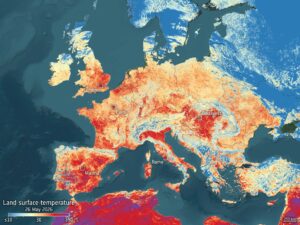
Climate shelters in Italy: a map of Italian cities
Several Italian cities have started developing maps that allow residents and visitors to identify where these places of refuge are located.
Below is a list of cities that have currently mapped their climate shelters:
- Bologna: https://www.comune.bologna.it/informazioni/rifugi-climatici
- Florence: https://ambiente.comune.fi.it/pagina/piano-del-verde-e-degli-spazi-aperti/rifugi-climatici
- Milan: https://www.comune.milano.it/servizi/welfare/milano-aiuta-estate/spazi-freschi-in-citta
- Turin: https://torinotopnews.it/cronaca/rifugi-climatici-torino-mappa-fresco-centri-comune/
- Rome: https://www.comune.roma.it/web/it/partecipa-progetti-partecipati.page?contentId=PRG1533344
- Naples: https://www.comune.napoli.it/novita/rifugi-climatici-di-napoli/
- Bergamo: https://www.comune.bergamo.it/atlante-rifugi-bioclimatici
- Brescia: https://www.comune.brescia.it/it/news/rifugi-climatici-in-citta
Climate shelters in Brescia
The Municipality of Brescia is developing a climate policy based on a long-term vision: transforming the city into a resilient, shaded, permeable and inclusive urban system, in which climate shelters become part of the city’s infrastructure for climate adaptation and well-being.
Action 6 of the Air and Climate Plan (Piano Aria Clima – PAC) is the first municipal measure to institutionalise the concept of a climate shelter and turn it into a planned city-wide network, with measurable objectives, technical criteria and a focus on urban accessibility.
Purpose of Action 6: ensuring shade, comfort and safety when moving around the city. The action responds to a key challenge: heatwaves make everyday journeys more difficult and potentially hazardous, particularly for older people, children and vulnerable groups. For this reason, the PAC introduces the concept of “moving in the shade”, which means:
- walking or cycling along shaded routes;
- having access to climate relief points;
- finding cool and safe places during the hottest days.
Establishing a formal climate shelter network. Action 6 does not simply define climate shelters: it organises them into a city-wide network based on criteria including:
- density;
- distribution;
- accessibility;
- connections with active mobility;
- social and health-related functions.
The network is conceived as an urban climate adaptation infrastructure, rather than as a collection of isolated places.
Operational objective: a climate shelter within a five-minute walk. This means:
- maximum distance: 300–400 metres;
- widespread coverage across the urban area;
- priority given to the most vulnerable neighbourhoods;
- integration with shaded pedestrian and cycling routes.
Mapping existing and potential climate shelters. The PAC provides for:
- an official map of existing climate shelters;
- widespread coverage across the urban area;
- priority given to the most vulnerable neighbourhoods;
- integration with shaded pedestrian and cycling routes.
Measures included in Action 6:
- Physical interventions: new trees and shading systems, pergolas, shade sails, green canopies, depaving and increased surface permeability, fountains, misting systems, drinking water points, rain gardens and blue infrastructure.
- Social interventions: summer opening of air-conditioned public spaces, involvement of schools, parishes and civic centres, communication campaigns and dedicated signage.
- Mobility interventions: shaded pedestrian routes, connections between climate shelters and small cool rest areas along key neighbourhood routes.
Cooling Poverty: Social Inequalities in the Age of Extreme Heat
Heat acts as a multiplier of social vulnerabilities: it increases isolation, intensifies energy poverty, reduces access to public spaces and services, undermines physical and psychological well-being, and limits people’s ability to carry out normal daily activities.
According to the World Health Organization (WHO), between 2000 and 2019 extreme heat was responsible for approximately 489,000 deaths per year worldwide, while heat-related mortality among people aged over 65 increased by around 85% between 2000–2004 and 2017–2021.
The impacts are particularly severe for older people, children, and individuals affected by cardiovascular, respiratory, metabolic or psychiatric conditions. Older people are among the groups most vulnerable to the effects of heatwaves. For them, risk does not depend solely on age or the presence of chronic conditions, but also on the quality of the environment in which they live. Homes without adequate cooling, the absence of green or shaded spaces within walking distance, reduced mobility and social isolation all significantly increase exposure to extreme heat and the likelihood of adverse health outcomes.
Another population group increasingly at risk is children. UNICEF states that by 2050 all children in Europe and Central Asia will be exposed to more frequent heatwaves, defined as 4.5 or more heatwaves per year. Around 81% will be exposed to long-duration heatwaves lasting 4.7 days or more, while 28% will experience high-intensity heatwaves with temperatures at least 2°C above the local average.
These figures become even more significant when we consider that the effects of heatwaves are not distributed evenly across the population. Exposure and adaptive capacity are strongly influenced by socioeconomic determinants such as income, housing quality, type of employment and neighbourhood of residence.
This is why the concept of cooling poverty is becoming increasingly relevant. It describes the inability of a growing proportion of the population to maintain adequate thermal conditions inside their homes and to access cooled public spaces. Climate therefore becomes a factor that amplifies existing inequalities.
In lower-income neighbourhoods, limited urban greenery, extensive soil sealing and restricted access to air-conditioning systems result in significantly greater heat exposure than in wealthier areas, turning extreme heat into an additional driver of social exclusion.
This is confirmed by the recent CMCC report “Heatwaves and the Social Impact of Climate Risks”, which highlights how urban warming is also an issue of social and economic justice. At a global level, owning an air-conditioning system increases electricity consumption by 36%, but this impact rises to 68% in Africa, while in Italy it is around 10%. Low-income households may spend up to 8% of their budget on cooling, compared with approximately 0.2–2.5% for wealthier households.
Another important issue concerns the well-being and safety of certain groups of workers. Globally, more than 2.4 billion workers are exposed to excessive heat conditions every year. Agriculture and construction are among the sectors most at risk, with documented effects on productivity, accident rates and the incidence of heat-related illnesses.
More specifically, higher temperatures sustained over longer periods can increase the risk of injury as a result of fatigue, loss of concentration, impaired decision-making and other related factors.
Projections also suggest that, under a 3°C global warming scenario, labour availability could decrease by as much as 24.8% in sectors most exposed to heat, with significant economic consequences also for Europe. The estimated loss in labour supply could reach 1% by 2100, while the resulting economic impacts could reduce EU GDP by half a percentage point as early as 2050.
Extreme heat also affects the economic health of businesses. A recent study carried out by the CNR shows that companies themselves can suffer the consequences of rising temperatures. As Del Monte explains, in practical terms, high temperatures can contribute to a company leaving the market through several channels, including lower productivity, higher energy and organisational costs, interruptions to operations, reduced customer footfall and impacts on employee health.
Extreme temperatures therefore take on a systemic relevance, representing an environmental transformation that generates complex social, economic and urban dynamics.
Heatwaves should consequently be understood as a climate, health and social emergency. They raise a fundamental issue for built-environment professionals, particularly in relation to urban equity. Urban heat islands and the possibility of finding cool, shaded places are closely interconnected and are the result of decades of planning and construction decisions.
The configuration of urban space, the materials used, the reduction in permeable surfaces and vegetation cover, together with the distribution of services and shaded spaces, directly influence the urban microclimate and the population’s level of exposure.
Urban design therefore becomes one of the main tools for mitigating climate risk and ensuring more equitable access to conditions of comfort and health.
The analysis carried out highlights that the design of climate shelters within a city must form part of a broader long-term vision and planning framework for resilience and climate change adaptation. The most effective strategies can be summarised as follows:
- Develop a Climate Change Adaptation Strategy and Plan, integrated with key planning instruments such as the municipal urban plan, the Sustainable Energy and Climate Action Plan and the Urban Green Plan. In particular, cities should provide green and blue infrastructure within the urban fabric, including trees, green roofs and walls, parks, gardens and vegetated corridors, in combination with natural or semi-natural infrastructure.
- Integrate environmental sustainability with urban planning and with building regulations that provide clear guidance on climate change adaptation. This includes, for example, reconsidering the types of materials used in public spaces in order to increase soil permeability and improve their response to solar radiation during the hottest days.
- Analyse the existing conditions of each neighbourhood in order to identify potential climate shelters. Heat island mapping data are essential, and should be compared with data and studies on service provision and neighbourhood-level socioeconomic indicators. This comparison makes it possible to accurately identify the most vulnerable urban areas from multiple perspectives and to prioritise targeted interventions in these neighbourhoods.
- Develop climate adaptation policies through a transdisciplinary approach.
European Regulatory Framework
The issue of urban climate shelters can be identified across several European Union legislative and policy instruments:
- Regulation (EU) 2024/1991 on nature restoration introduces binding obligations for urban ecosystems, establishing that by 2030 there must be no net loss of urban green space and tree canopy cover, followed by a progressive increase in subsequent years.
- European Commission Communication COM(2021) 82 – “EU Strategy on Adaptation to Climate Change” recognises climate shelters as urban adaptation infrastructure and promotes nature-based solutions to reduce urban heat island effects.
- European Commission Communication COM(2020) 380 – “EU Biodiversity Strategy for 2030” calls for an increase in urban green space and the development of ecological corridors.
- Regulation (EU) 2020/852, which establishes the framework for the EU taxonomy of environmentally sustainable economic activities, identifies climate change adaptation as one of the six environmental sustainability objectives.
- Regulation (EU) 2018/1999 on the Governance of the Energy Union and Climate Action requires Member States to integrate climate adaptation measures into their national energy and climate plans.
Taken together, these instruments establish a regulatory framework that positions climate shelters as a structural measure for urban climate adaptation, based on widespread green networks, favourable microclimates and the protection of vulnerable populations.
Elisa Brolli
Engineer | LEED AP | Environmental Sustainability Dept. ODUElab
Web References
https://climate-adapt.eea.europa.eu/it
https://www.salute.gov.it/new/it/tema/ondate-di-calore/bollettini-sulle-ondate-di-calore-0
https://climate-adapt.eea.europa.eu/en/metadata/case-studies/gaia-green-area-inner-city-agreement-to-finance-tree-planting-in-bologna
http://www.urbanisticainformazioni.it/Rifugio-climatico.html
https://www.comune.brescia.it/it/news/rifugi-climatici-in-citta
https://www.ansa.it/sito/notizie/cronaca/2026/08/05/caldo-record-con-27-citta-da-bollino-rosso-ancora-morti_e8e5ac9a-3aae-4048-bd10-537bd2654d36.html#google_vignette
https://www.sciencedirect.com/science/article/abs/pii/S0038092X0000089X
https://www.today.it/dossier/scienze/caldo-come-abbassare-temperatura-citta-esempio-medellin.html?utm_source=autopromo
https://experience.arcgis.com/experience/97a1ee11f50e4c36afb48b93007b4fb8/page/Version-Fran%C3%A7aise?data_id=dataSource_3-1889668efc9-layer-10-188d49be087-layer-7%3A28
https://climate-adapt.eea.europa.eu/it/metadata/case-studies/paris-oasis-schoolyard-programme-france/
https://cittaclima.it/wp-content/uploads/2017/05/climacitta_atticonferenza.pdf
https://www.vdnews.it/ambiente-e-sostenibilita/2026/06/23/news/rifugi-climatici-cosa-sono-dove-sono-e-perche-l-italia-arranca-22176849/
https://www.barcelona.cat/barcelona-pel-clima/sites/default/files/climate_plan_maig.pdf
https://experience.arcgis.com/experience/97a1ee11f50e4c36afb48b93007b4fb8/page/ENG
https://storage.googleapis.com/stu-bergamo-public-prod/2026-07/Rifugi_Climatici_BOCCALEONE.pdf
https://www.comune.bologna.it/informazioni/rifugi-climatici
https://www.comune.brescia.it/it/news/rifugi-climatici-in-citta
https://cittaclima.it/wp-content/uploads/2024/07/Strategia-Adattamento-Brescia.pdf
https://www.comune.bergamo.it/node/884723
https://ambiente.comune.fi.it/pagina/piano-del-verde-e-degli-spazi-aperti/rifugi-climatici
https://www.comune.milano.it/servizi/welfare/milano-aiuta-estate/spazi-freschi-in-citta
https://www.comune.roma.it/web/it/attivita-progetto.page?contentId=PRG1533344
https://torinotopnews.it/cronaca/rifugi-climatici-torino-mappa-fresco-centri-comune/
https://www.comune.napoli.it/novita/rifugi-climatici-di-napoli/
https://www.comune.roma.it/web-resources/cms/documents/Mun08_Progetto_RESPIRO__Rifugi_Ecosostenibili_e_Spazi_Pubblici_Inclusivi_per_la_Resilienza_alle_Ondate_di_calore_urbano.pdf
https://www.domusweb.it/it/notizie/2026/07/23/sede-partito-comunista-francese-niemeyer-rifugio-climatico.amp.html
https://science.nasa.gov/earth/earth-observatory/running-through-paris-heat-153178/
https://alleyoop.ilsole24ore.com/2026/07/10/quando-il-caldo-diventa-un-lusso-che-non-tutti-possono-permettersi/?refresh_ce=1
https://www.secondowelfare.it/primo-welfare/caldo-questione-sociale/
https://www.who.int/news-room/fact-sheets/detail/climate-change-heat-and-health
https://www.who.int/health-topics/climate-change#tab=
https://www.who.int/news/item/22-08-2025-who-wmo-issue-new-report-and-guidance-to-protect-workers-from-increasing-heat-stress
https://ambientenonsolo.com/ondate-di-calore-e-impatti-sociali-cosa-ci-dice-la-ricerca-del-cmcc/
https://www.lavoro.gov.it/stampa-e-media/comunicati/vademecum-rischi-calore
https://www.cnr.it/it/comunicato-stampa/14544/il-caldo-estremo-colpisce-anche-le-imprese
https://storagehub.homnya.net/cmsimage/2026/07/lg-caldo-inquinamento-agg-2026_0.pdf
https://www.salute.gov.it/new/it/tema/ondate-di-calore/bollettini-sulle-ondate-di-calore-0/?tema=Ondate+di+calore
https://www.unicef.org/eca/media/30076/file/Beat%20the%20Heat%20Report.pdf

Looking for more engaging content?
Subscribe to the DVArea Newsletter to stay informed about our latest updates in architecture, construction, digitalisation, and integrated sustainability.